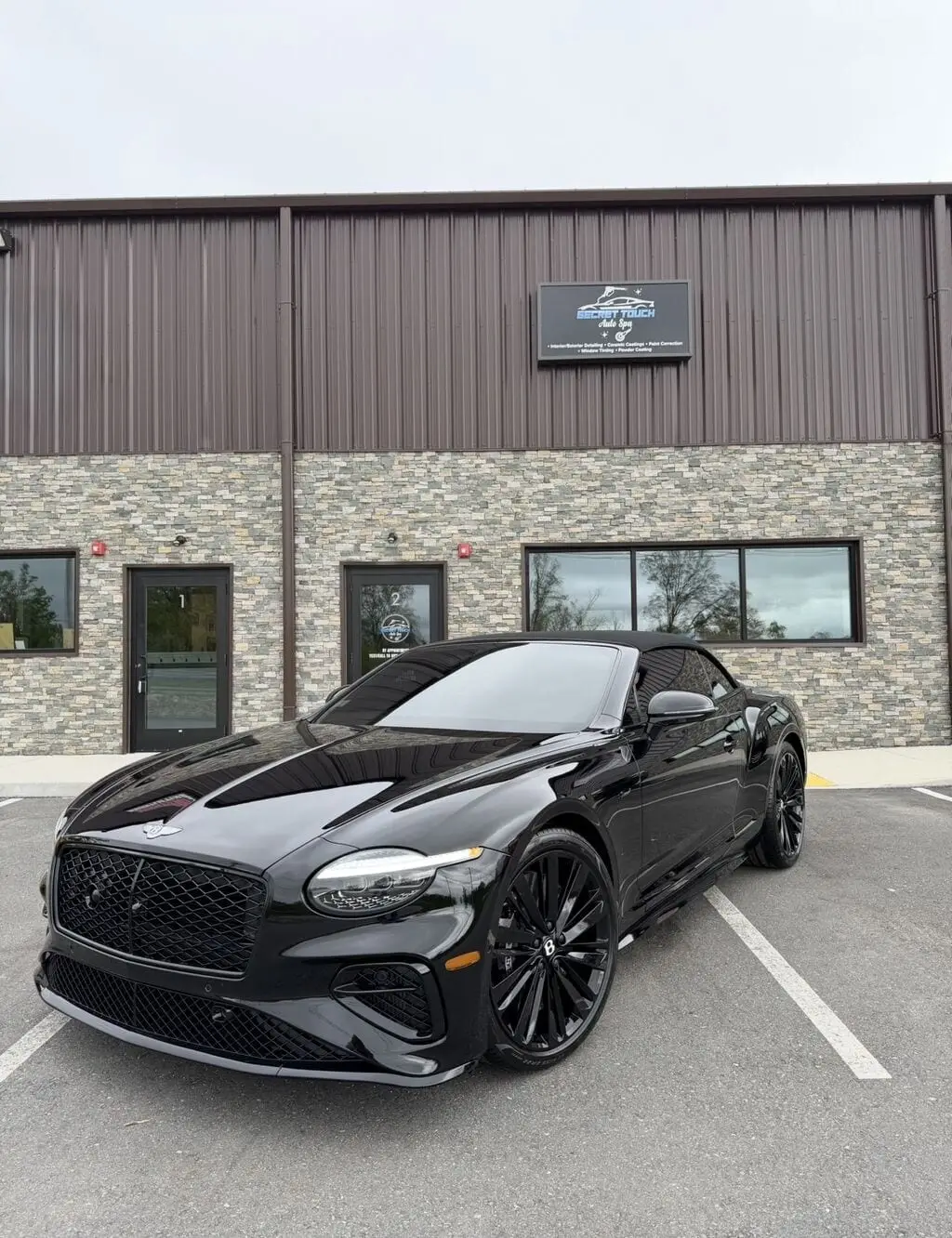
Wheel & Caliper Ceramic Coating: Why It Matters in Massachusetts
May 21, 2026 · Secret Touch Auto Spa Team · Shrewsbury, MA
Your wheels and brake calipers take more abuse than any other part of your car. They live in a constant storm of brake dust, iron fallout, road tar, UV exposure, and in Central Massachusetts, six months of corrosive winter salt. Yet most paint protection plans stop at the body and leave the most punished surfaces unprotected. Professional wheel and brake caliper ceramic coating closes that gap with a sacrificial, high temperature layer that keeps your finish looking new and dramatically cuts your cleaning time.
What Is Wheel and Caliper Ceramic Coating?
Ceramic coating is a liquid polymer made of silicon dioxide (SiO2) that bonds chemically to the finish of your wheel or caliper. Once cured it forms a hard, transparent, hydrophobic layer that brake dust, chemicals, and water cannot grip the way they grip bare paint or clear coat. Caliper coatings use a modified high temperature resin engineered for surfaces that routinely cycle past 400°F under hard braking.
Rated past 600°F continuous heat
Our caliper coatings hold gloss and color through repeated brake heat cycles, the exact failure point for ordinary caliper paint.
Why Your Wheels Need Their Own Protection
Brake Dust Release
Iron particles from brake pads bake onto hot wheels and corrode the finish. A coated wheel rinses clean with water.
High Heat Resistance
Performance braking pushes calipers and inner barrels past 400°F. Specialty ceramic resins hold up where wax cannot.
Salt & Winter Defense
Massachusetts winters destroy unprotected wheels. The hydrophobic layer keeps salt brine from etching the finish.
UV & Gloss Retention
Painted, powder coated, and OEM gloss black wheels all fade under UV. Coating locks in depth and color stability.
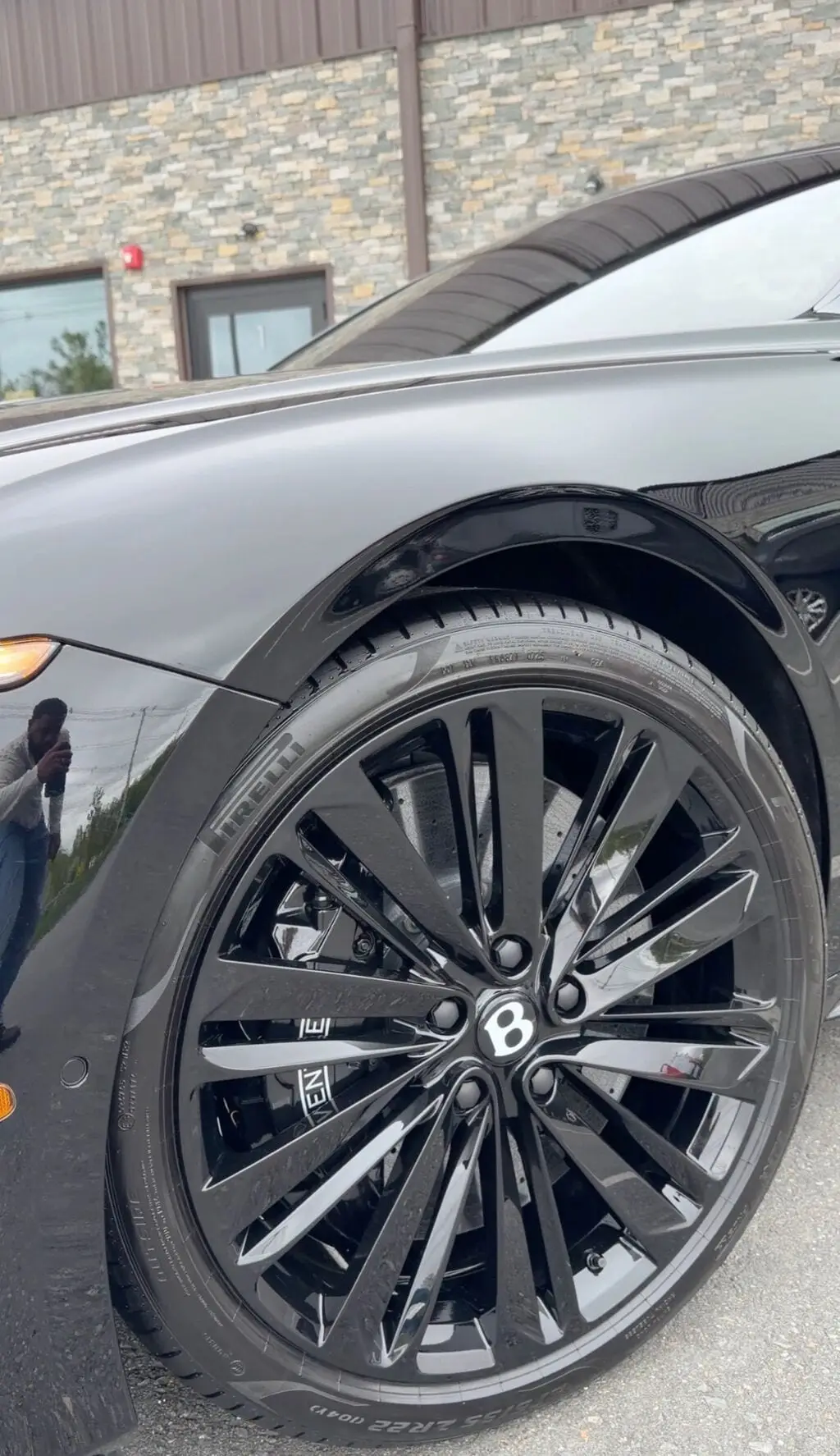
Our Wheel-Off Process
The reason most off-the-shelf wheel coatings disappoint is application. You cannot get a durable bond on a wheel that is still on the vehicle. At our Shrewsbury studio every wheel gets a true wheel-off prep before a drop of product touches it.
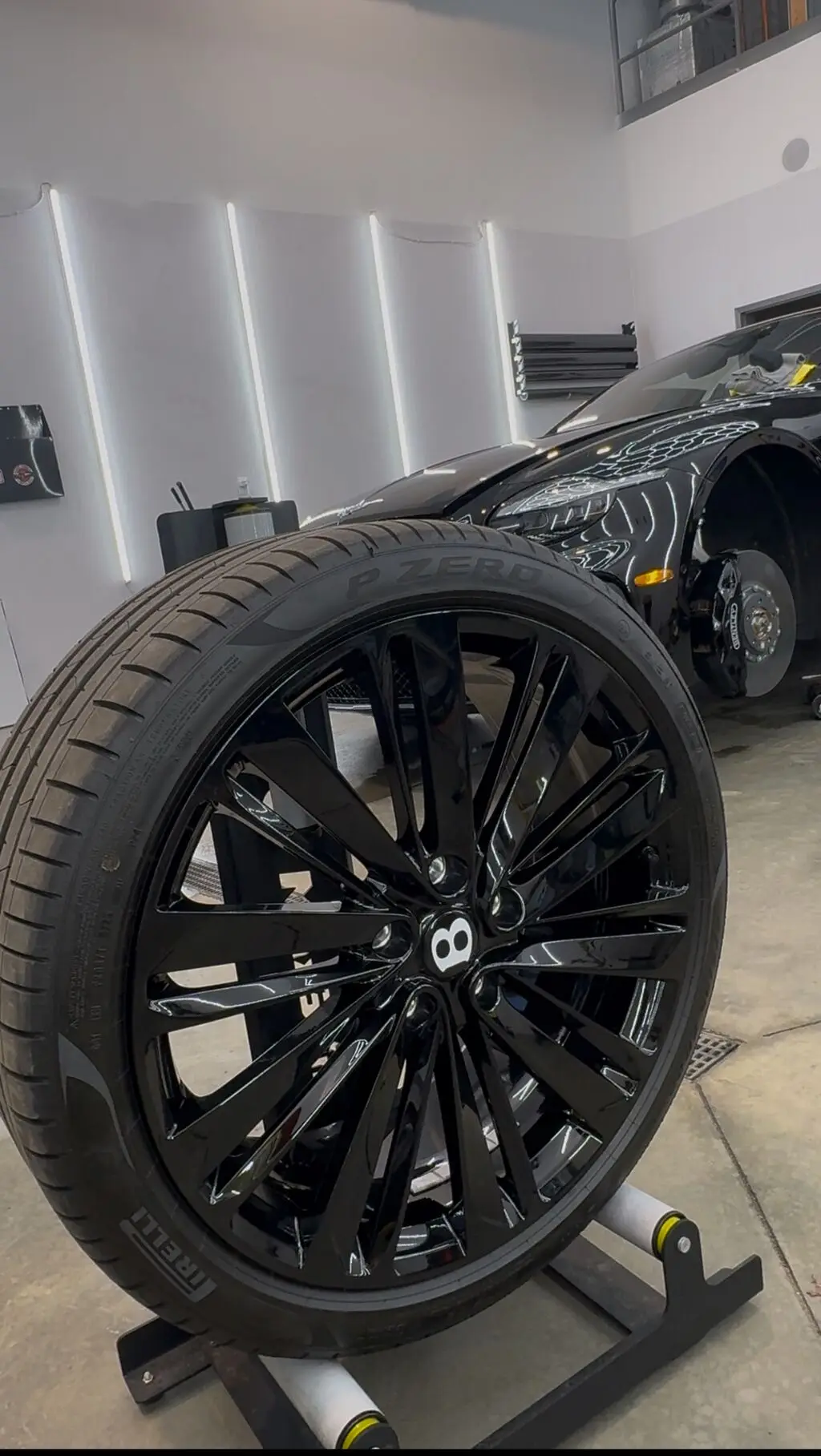
Five-Step Application
- 1Remove wheels and lift the vehicle for full caliper access.
- 2Deep wash both faces and the barrel with iron remover.
- 3Mechanical decontamination, clay, and IPA panel wipe.
- 4Hand applied ceramic coating, leveled and flashed off.
- 5Cure under controlled shop conditions before reinstall.
Brake Caliper Coating: The Detail Most Shops Skip
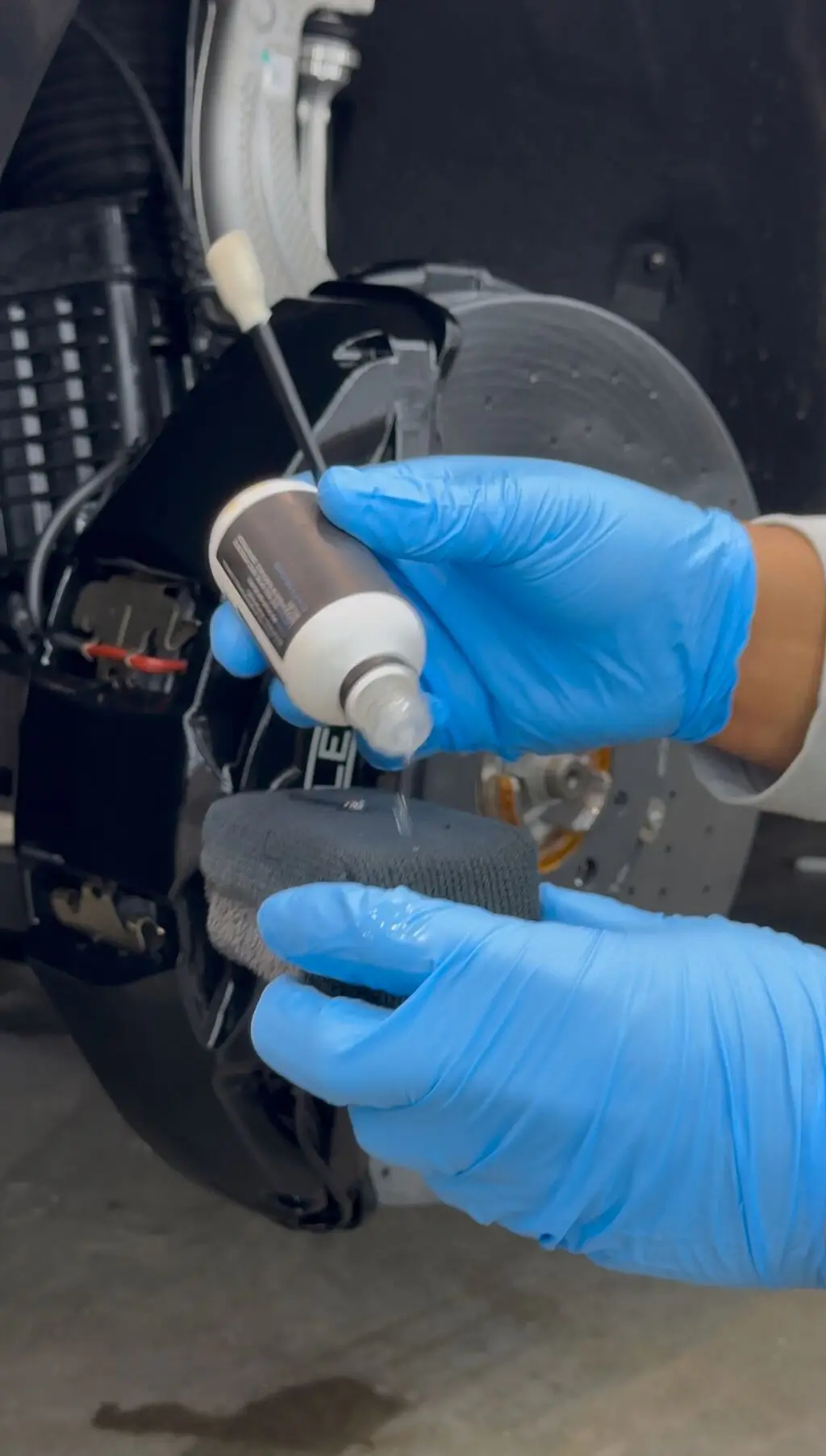
Painted calipers look incredible the day they roll out of the shop. Twelve months of brake heat later they are chalky, faded, and covered in baked-on dust. A high temperature ceramic layer applied directly over a prepped caliper locks in the color, blocks contamination, and makes future cleanups a rinse rather than a project.
Shrewsbury Pricing
Wheel Coating
Up to 20 inch
$250
Wheel Coating
Up to 31 inch
$300
Brake Caliper Coating
Quote on inspection
From $250
Pricing applies to standard finishes in clean condition. Heavy contamination, curb rash repair, or refinishing may add to your quote.
Wheel Ceramic Coating vs. Wax or Sealant
Wax and traditional sealants are not built to survive brake heat. They flash off within weeks on a caliper and bake into a sticky residue on the inner barrel. Ceramic coating bonds at the molecular level, tolerates the heat, and resists the chemicals in brake cleaners and most wheel cleaners. For a daily driven vehicle in Worcester County, it is the only finish protection that genuinely earns its keep on wheels.
Frequently Asked Questions
How long does wheel ceramic coating last?
A professionally applied wheel ceramic coating typically lasts 2 to 4 years depending on driving conditions, wash habits, and brake dust load. Caliper-specific high temperature coatings hold up under repeated heat cycling and resist the discoloration painted calipers normally develop over time.
Do you remove the wheels to coat them?
Yes. For best results we remove each wheel so the entire barrel, face, and backside can be properly decontaminated, wiped down with isopropyl alcohol, and coated. Off-vehicle prep is the difference between a coating that lasts years and one that fails within months.
Does ceramic coating work on powder coated or painted wheels?
Yes. Ceramic coating bonds to powder coated, painted, polished, and OEM finishes. It adds a sacrificial hydrophobic layer that protects the underlying finish from brake dust, chemicals, and UV fade without changing the look of the wheel.
How much does wheel and caliper ceramic coating cost in Shrewsbury MA?
Wheel ceramic coating at Secret Touch Auto Spa starts at $250 for wheels up to 20 inches and $300 for wheels up to 31 inches. Brake caliper ceramic coating is offered as part of our specialty coating menu and is quoted based on caliper size and finish condition.
Road Salt, Brake Dust & Seasonal Protection FAQ
Answers specific to Worcester County winters, MassDOT salt cycles, and protecting wheels and calipers year-round in Central Massachusetts.
How does Massachusetts road salt damage uncoated wheels?
MassDOT applies sodium chloride brine and rock salt across Route 9, I-290, and I-495 from late November through March. That salt mixes with snowmelt and bonds directly to bare clear coat, machined faces, and painted calipers. Over a single Worcester County winter it can cause white oxidation on polished lips, bubbling clear coat on the wheel face, and rust blooms on caliper hardware. A ceramic coating creates a hydrophobic barrier the brine cannot grip, so a quick rinse flushes the salt off before it has time to etch.
Will ceramic coating stop brake dust from sticking to my wheels?
Iron particles from your brake pads come off red hot and embed into any porous finish, especially on European vehicles around Shrewsbury and Westborough that run aggressive pads. Ceramic coating closes those pores and lowers the surface temperature the dust contacts, so most of it rinses off with a pressure washer instead of needing a dedicated iron remover every wash. You will not eliminate brake dust, but you cut cleaning time roughly in half and prevent the baked-on staining that ruins uncoated wheels.
Is it worth coating wheels before winter in Central MA?
Late September through early November is the ideal window. Coating before the first salt event means the barrier is fully cured before MassDOT begins pre-treating roads, and the wheels are protected during the harshest months. If you run a dedicated set of winter wheels, coating those is actually higher value than coating summer wheels, since winter wheels see all of the corrosive exposure.
How should I wash coated wheels during a Massachusetts winter?
Rinse the wheels and wheel wells with a pressure washer or hose within 24 to 48 hours of any salted drive. Use a pH-neutral wheel soap and a soft wheel brush, then rinse again. Avoid acidic wheel cleaners and avoid touchless car washes that spray aggressive alkaline pre-soaks, both of which shorten coating life. Done correctly, a coated wheel in Worcester County winter takes about five minutes per corner to clean.
Do brake calipers really need a separate high-temperature coating?
Yes. Calipers see sustained temperatures of 400 to 600 degrees Fahrenheit during hard stops on I-90 or after mountain runs out to the Berkshires. Standard wheel ceramic coatings are not formulated for that heat range and will yellow or fail. A dedicated caliper coating is engineered for repeated heat cycling, prevents the chalky oxidation painted calipers develop, and keeps factory or custom caliper paint looking new for years.
Can you coat winter wheels and summer wheels at the same time?
Absolutely, and it is the most cost-effective way to protect both sets. We schedule both sets in a single visit, coat them off the vehicle, and you swap them seasonally as normal. Many Worcester County drivers bring both sets in October so the winters go on protected and the summers are ready to mount back up in April.
Whether you are protecting a brand new set of OEM wheels or restoring confidence in a daily driver, a proper wheel and caliper ceramic coating is one of the highest value upgrades you can make. To see all of our coating tiers and pair this work with full paint protection, view our ceramic coating packages. If you already have aftermarket wheels you want refinished first, our powder coating service pairs perfectly with a ceramic layer on top.
Ready to Protect Your Wheels & Calipers?
Professional wheel-off ceramic coating in Shrewsbury MA. Serving Worcester County and Central Massachusetts.